
Manx Shearwater (c) Ed Marshall
By Christopher Cachia-Zammit, Seabird Surveyor
The seabird team is celebrating an important milestone: the completion of Manx Shearwater surveys across several colonies on Tresco, Bryher, Gugh, and St Agnes, as well as Round Island and St Helen’s.
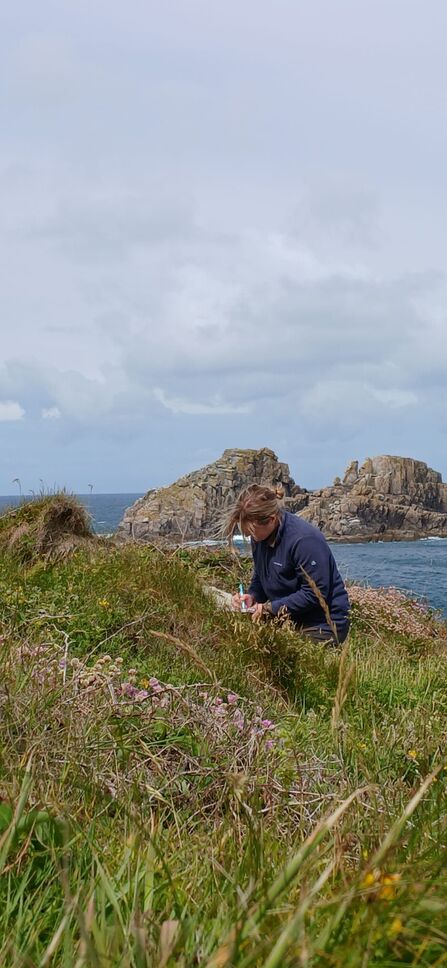
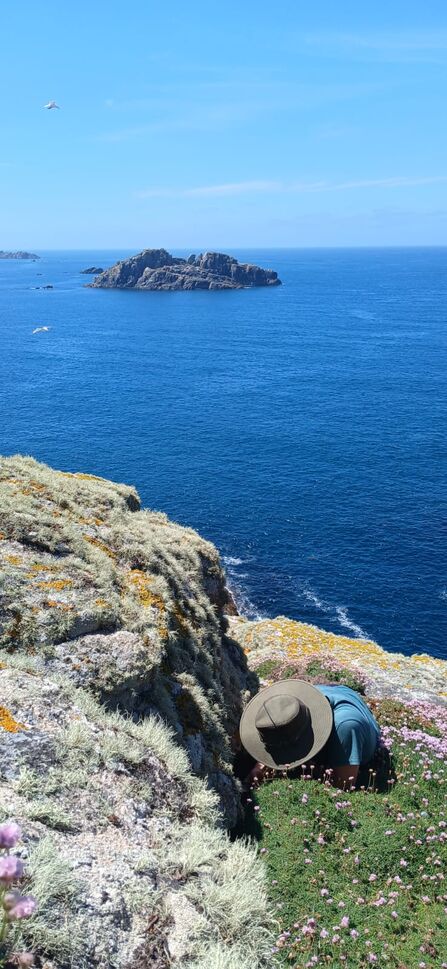
These surveys began at the end of May, the time of year when the birds are most responsive as they are actively defending their burrows from potential intruders. This makes our job easier as we play recordings of Manx Shearwater calls at the entrance of burrows to encourage a response.
The data we collected will give us a good idea of how Manx Shearwaters are doing across the islands. This is particularly important on St Agnes and Gugh, where populations have shown a very positive trend since the islands were declared rat-free in 2015. It also helps us assess colonies on islands that still have rats.

By Christopher Cachia-Zammit
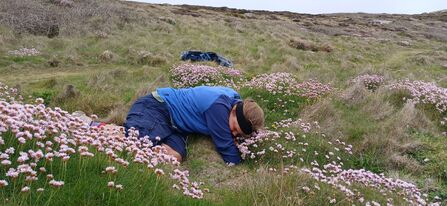
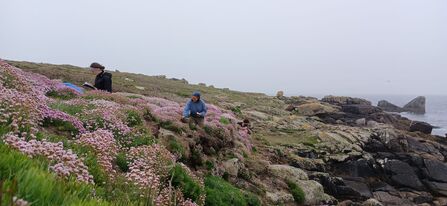
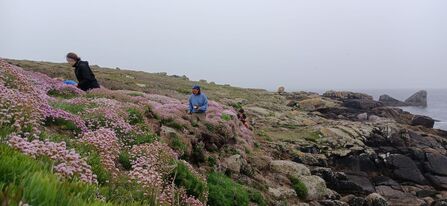
A typical day starts with a boat trip from St Mary’s, followed by a walk to the colonies where we begin searching for suitable burrows. Once we find one, we play a mixture of male and female calls at the entrance, lying as close as possible to listen for a response. Sometimes this means lying flat on our stomachs with half our head inside the burrow - which often earns us a few puzzled looks!
If a burrow is occupied, we hear the unmistakable eerie call of an adult bird from inside. This is the same haunting sound that, according to legend, once frightened Viking raiders away from islands like Skomer where they mistook the calls for bad spirits.
Unfortunately, not all birds respond. To account for this we apply a correction factor to the final numbers from our survey. This is calculated by monitoring the responses from 50 burrows over the course of a week. A team of Master’s students from Exeter University supported this work, helping us gather the data needed to estimate how many burrows are occupied this year.
Over the course of 11 days, the seabird team checked more than 700 burrows. Now that the fieldwork is complete, we can begin the statistical analysis. We look forward to sharing the results with the public at the end of the seabird season!

©Chris Gomersall/2020VISION